
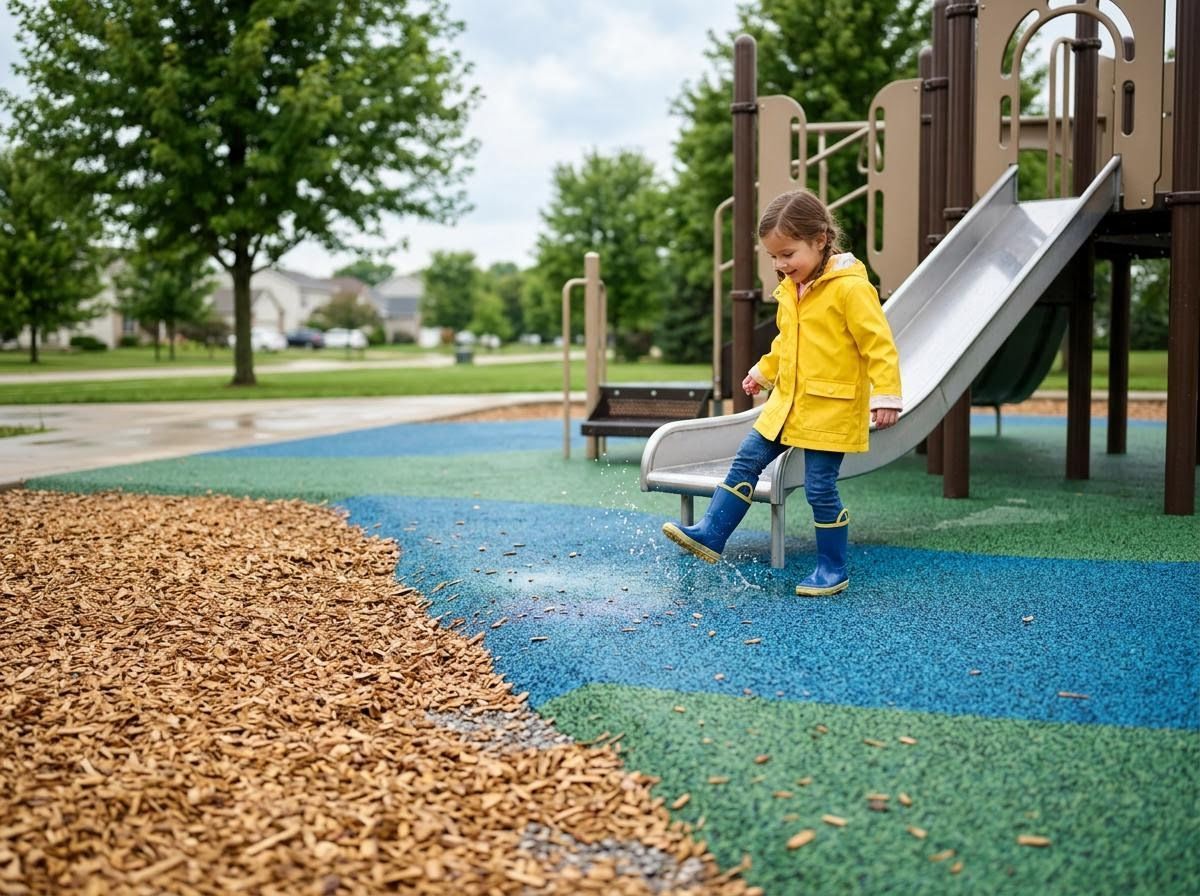
Ensuring a safe and enjoyable playground experience often hinges on one crucial, yet frequently overlooked, factor: proper drainage. Heavy rainfall can transform a fun play area into a muddy, hazardous zone if the surface isn't equipped to handle it effectively. At Pacific Playground, we understand the importance of resilient surfacing, and today we'll explore how two popular options, Engineered Wood Fiber (EWF) and Poured-in-Place (PIP) rubber, manage significant precipitation and maintain playability.
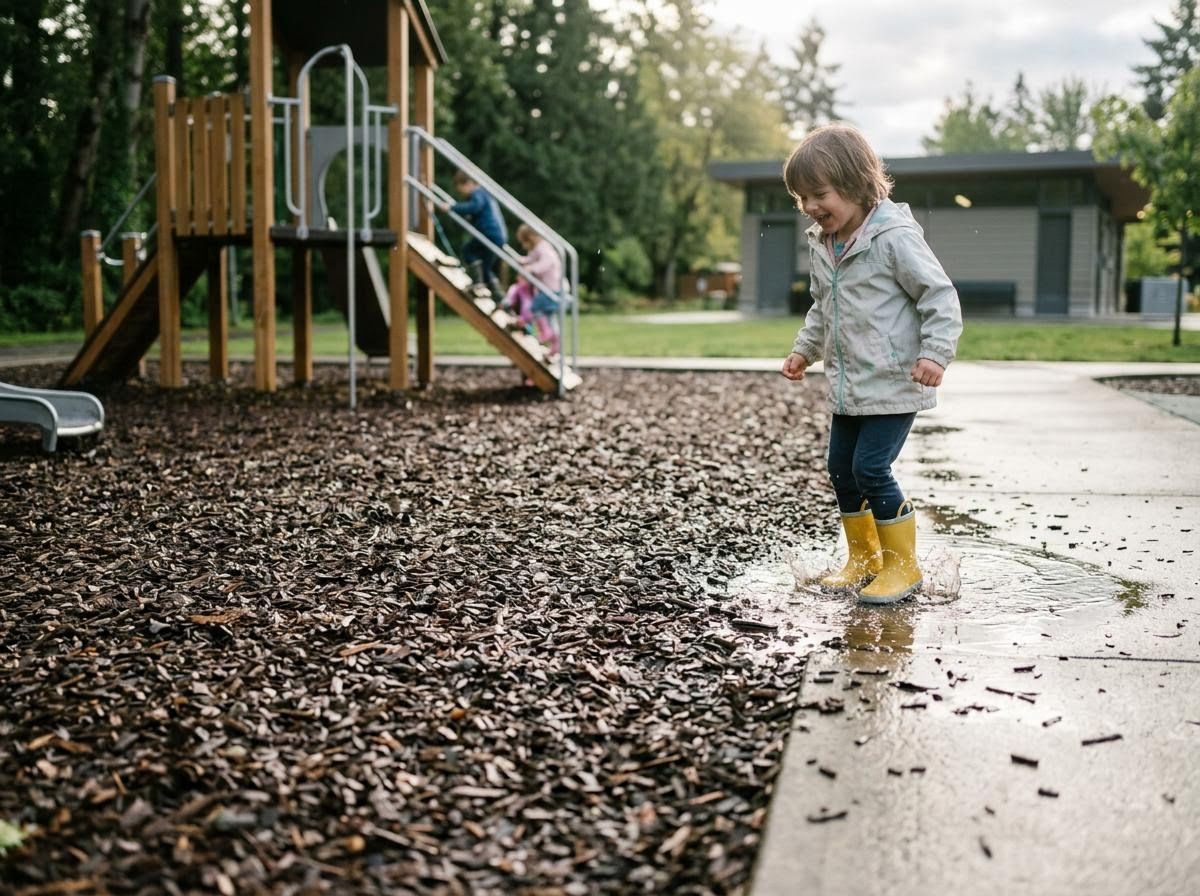
Engineered Wood Fiber (EWF) and Natural Drainage
Engineered Wood Fiber, commonly known as wood chips or mulch specifically processed for playgrounds, offers a naturally permeable surface. Its primary method of drainage relies on water percolating through the fibrous material to the sub-base below. The individual wood pieces create natural voids and channels, allowing water to filter downwards. When installed correctly over a suitable drainage layer, such as crushed stone or gravel, EWF can effectively absorb and disperse large volumes of rainwater, preventing pooling on the surface. Regular maintenance, including raking and replenishment, is vital to prevent compaction, which can reduce its permeability and lead to drainage issues over time.
Poured-in-Place (PIP) Rubber and Engineered Solutions
Poured-in-Place rubber surfacing, a seamless option made from rubber granules and binders, handles drainage through an engineered approach. While the rubber surface itself can be less permeable than EWF, its drainage capabilities are often integrated into its design and installation. Many PIP systems are installed over a carefully prepared sub-base, such as crushed rock or asphalt, that is sloped to direct water away from the play area. Some advanced PIP systems incorporate permeable backing layers or are designed with inherent porosity, allowing water to filter through the surface and into a dedicated drainage system beneath. The effectiveness of PIP drainage is highly dependent on the quality of its installation, including the proper sloping and underlying drainage infrastructure.
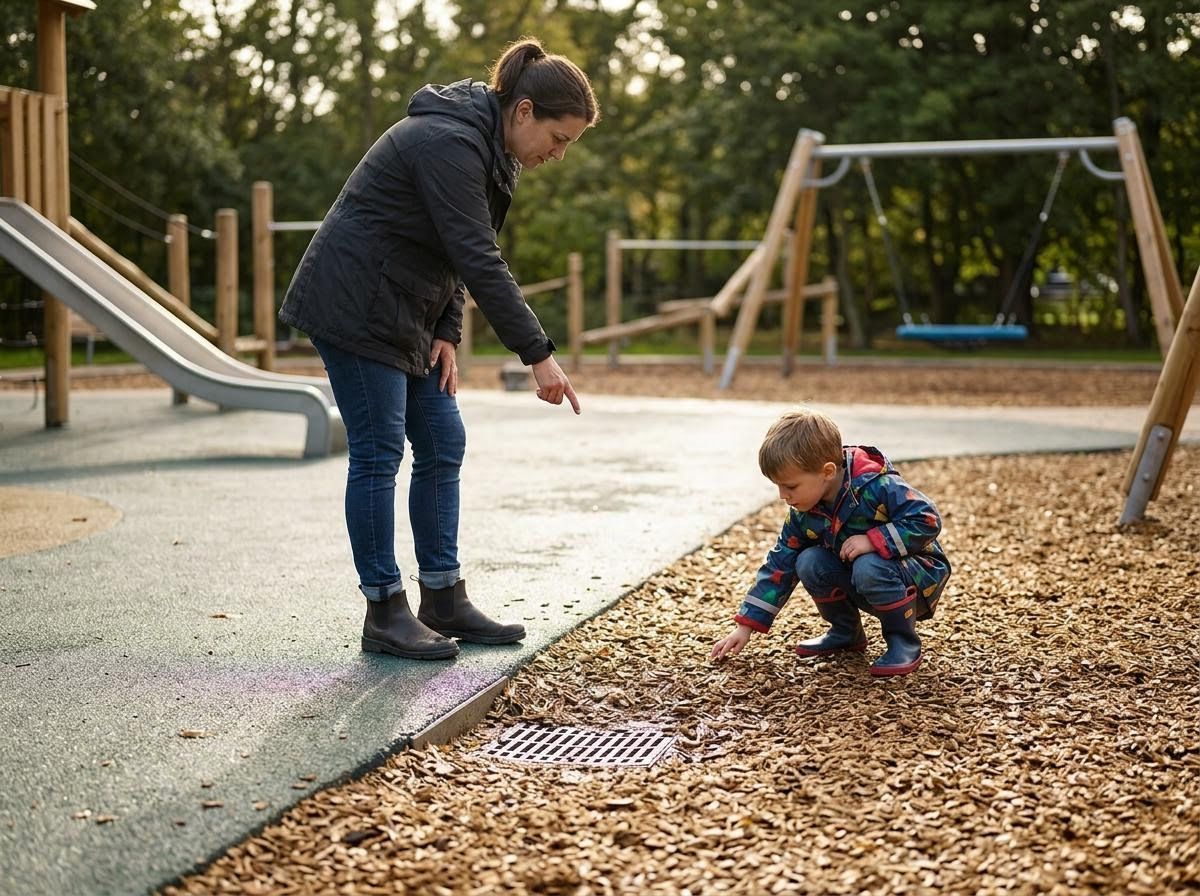
Factors Influencing Drainage Performance
Regardless of the surface type, several factors significantly impact how well a playground drains during heavy rain. These include the underlying soil conditions, the slope of the playground area, and the presence of any additional drainage systems like French drains or catch basins. For EWF, the depth of the material and the condition of the sub-base are critical; insufficient depth or a poorly draining sub-base will lead to saturation. For PIP, accurate site grading during installation is paramount to ensure water flows efficiently off the surface or through its permeable layers. Proper installation by experienced professionals is key to maximizing the drainage performance of both EWF and PIP surfaces.
Maintenance for Optimal Drainage
Ongoing maintenance plays a crucial role in preserving the drainage capabilities of both EWF and PIP surfaces. For EWF, routine raking helps prevent compaction and redistributes the material evenly, maintaining its natural porosity. Replenishing EWF as it degrades or disperses is also important to ensure adequate depth for safety and drainage. For PIP surfaces, keeping the surface clean from debris like leaves, dirt, and litter prevents blockages in any permeable layers or surface textures designed for water runoff. Regular inspections to identify and address any cracks or damage can also prevent water from infiltrating the system in undesirable ways, preserving the integrity of the surface and its drainage functions.
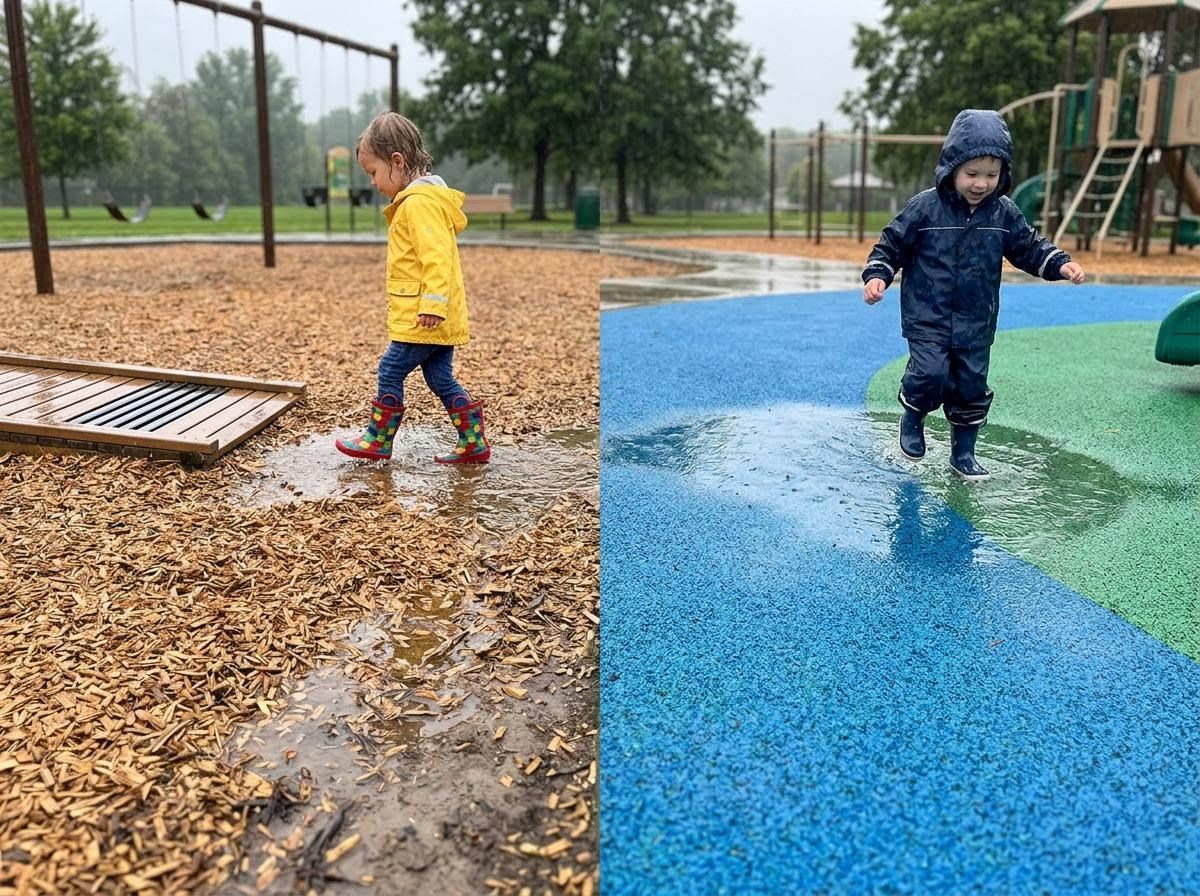
Choosing the Right Surface for Your Environment
Understanding how different playground surfaces manage heavy rain and drainage is vital for creating a safe and lasting play environment. Both Engineered Wood Fiber and Poured-in-Place rubber offer robust solutions, but their effectiveness is significantly influenced by proper installation, site-specific conditions, and ongoing maintenance. Pacific Playground is dedicated to helping you navigate these choices, ensuring your investment withstands the elements and provides a high-quality, resilient play space for years to come. To learn more about selecting the ideal playground surface for your specific environmental conditions and safety needs, explore our comprehensive guide to playground surfacing options.