
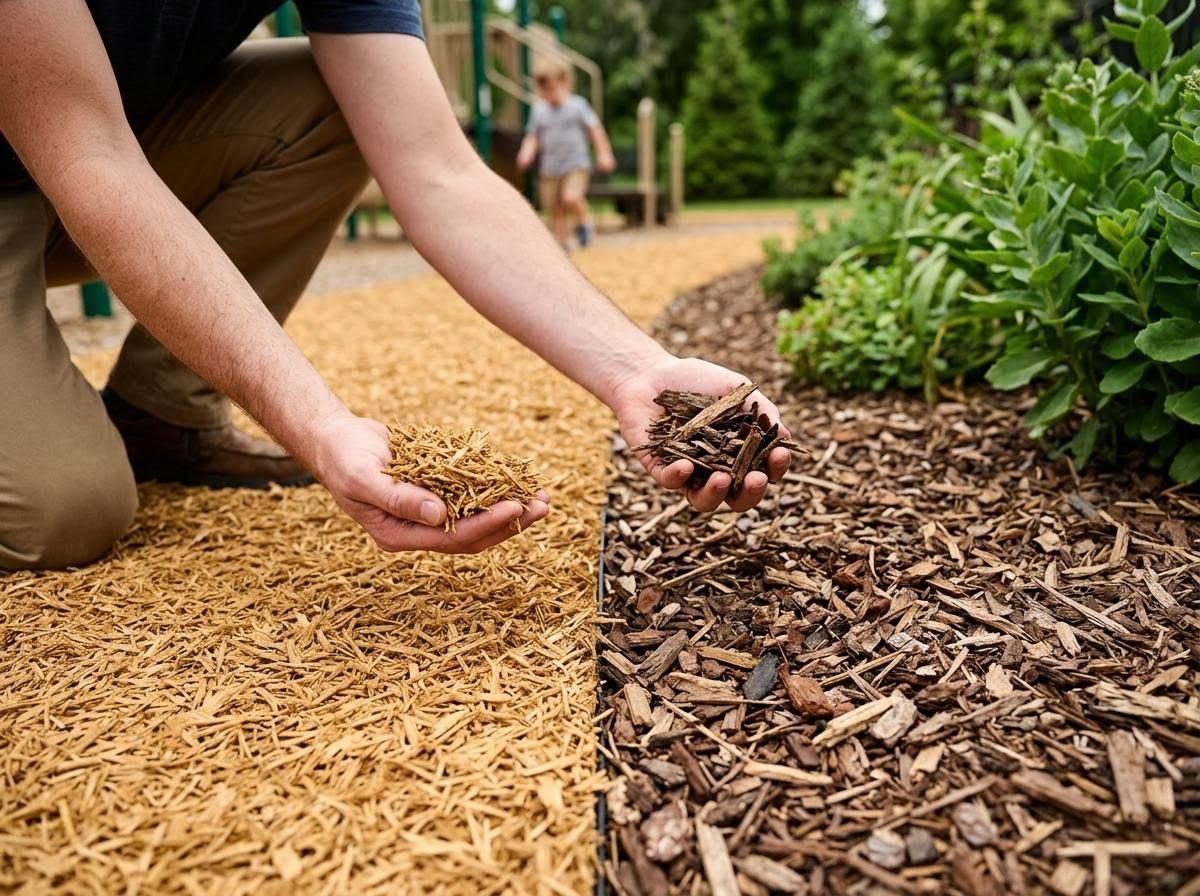
It's a common misconception to assume that all wood-based ground coverings are interchangeable. While both engineered wood fiber (EWF) and landscaping mulch are derived from wood, their compositions, processing, and intended uses are distinctly different. Understanding these differences is crucial, especially when considering safety and functionality for various applications. As Pacific Playground, we often encounter questions about the best surfacing options, and clarifying this distinction is essential for making informed decisions.

Understanding Engineered Wood Fiber (EWF)
Engineered Wood Fiber (EWF) is a specialized material designed specifically for playground surfacing. It's produced from the virgin wood of trees, typically hardwoods, and processed into a fibrous material that interlocks to form a stable, impact-absorbing surface. The key characteristic of EWF is its consistent particle size and shape, ensuring uniform cushioning. This consistency allows it to meet stringent safety standards, such as those set by ASTM (American Society for Testing and Materials) for fall attenuation in playgrounds. EWF is tested for its ability to absorb impact, reducing the risk of serious injuries from falls.
What is Landscaping Mulch?
Landscaping mulch, on the other hand, encompasses a broad category of materials primarily used for aesthetic and horticultural purposes in gardens and landscape beds. It can be made from various types of wood, including bark, shredded wood from different tree species, and sometimes even recycled wood from construction debris. Its primary functions include suppressing weeds, retaining soil moisture, regulating soil temperature, and enhancing the visual appeal of a landscape. Landscaping mulch often varies widely in particle size, shape, and composition, and it is not designed or tested for impact absorption or fall protection.
Key Distinctions in Purpose and Safety
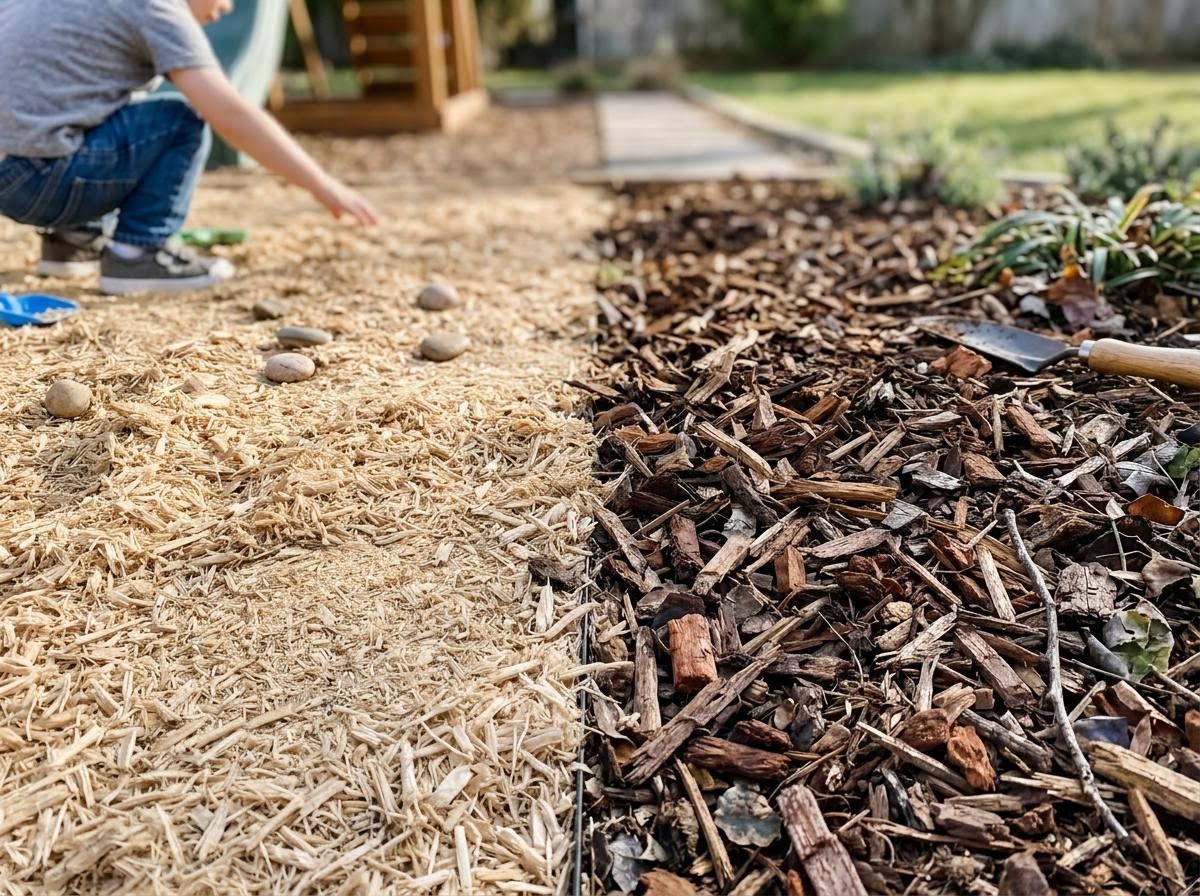
The fundamental difference between EWF and landscaping mulch lies in their intended purpose and safety characteristics. EWF is engineered for safety; its fibrous nature allows it to compact into a surface that provides critical fall protection. It's often required to be installed at specific depths to meet safety ratings for different fall heights. Landscaping mulch, while beneficial for plants, lacks this critical impact attenuation property. Its irregular pieces and tendency to decompose unevenly make it unsuitable as a safety surface for playgrounds. Using landscaping mulch in a play area could significantly compromise safety and fail to meet regulatory requirements for playground surfacing.
Why the Right Material Matters
Choosing the correct material for your project is paramount. For playgrounds, the health and safety of children are at stake, making EWF the appropriate and often mandated choice due to its proven ability to mitigate fall impact. For garden beds, landscaping mulch offers excellent benefits for plant health and garden aesthetics. Substituting one for the other can lead to either unsafe play environments or ineffective landscaping solutions. The processing, testing, and application standards for EWF are rigorous, ensuring it performs its critical safety function reliably, a characteristic not shared by general landscaping mulch.
The distinction between engineered wood fiber and landscaping mulch is far more than semantic; it's about functionality, safety, and compliance with industry standards. While both are wood products, EWF is meticulously processed and tested to create a safe, resilient surface for playgrounds, offering vital protection against falls. Landscaping mulch serves a valuable role in gardening, enriching soil and enhancing visual appeal, but it should never be used as a substitute for certified playground surfacing. To ensure your play areas are safe and meet all necessary guidelines, or to explore durable surfacing options, consider reaching out to experts who understand the nuances of these materials.