
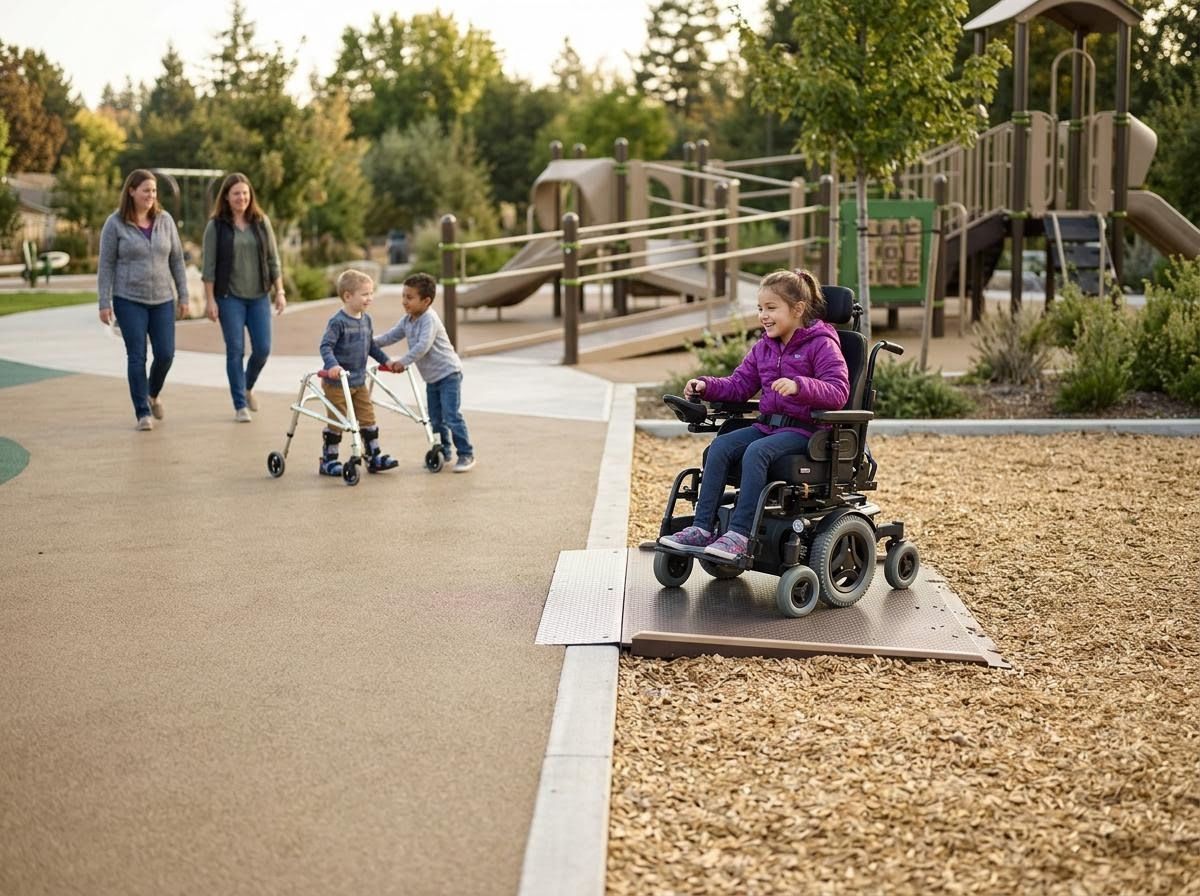
Creating an inclusive play environment is paramount, and a critical component of achieving this is selecting the right playground surfacing that adheres to Americans with Disabilities Act (ADA) standards. For playground developers and community planners, the choice often comes down to Poured-in-Place (PIP) rubber or Engineered Wood Fiber (EWF). Both materials offer distinct advantages, and understanding their nuances regarding accessibility is key to making an informed decision for your project. At Pacific Playground, we understand the importance of making play accessible to everyone.
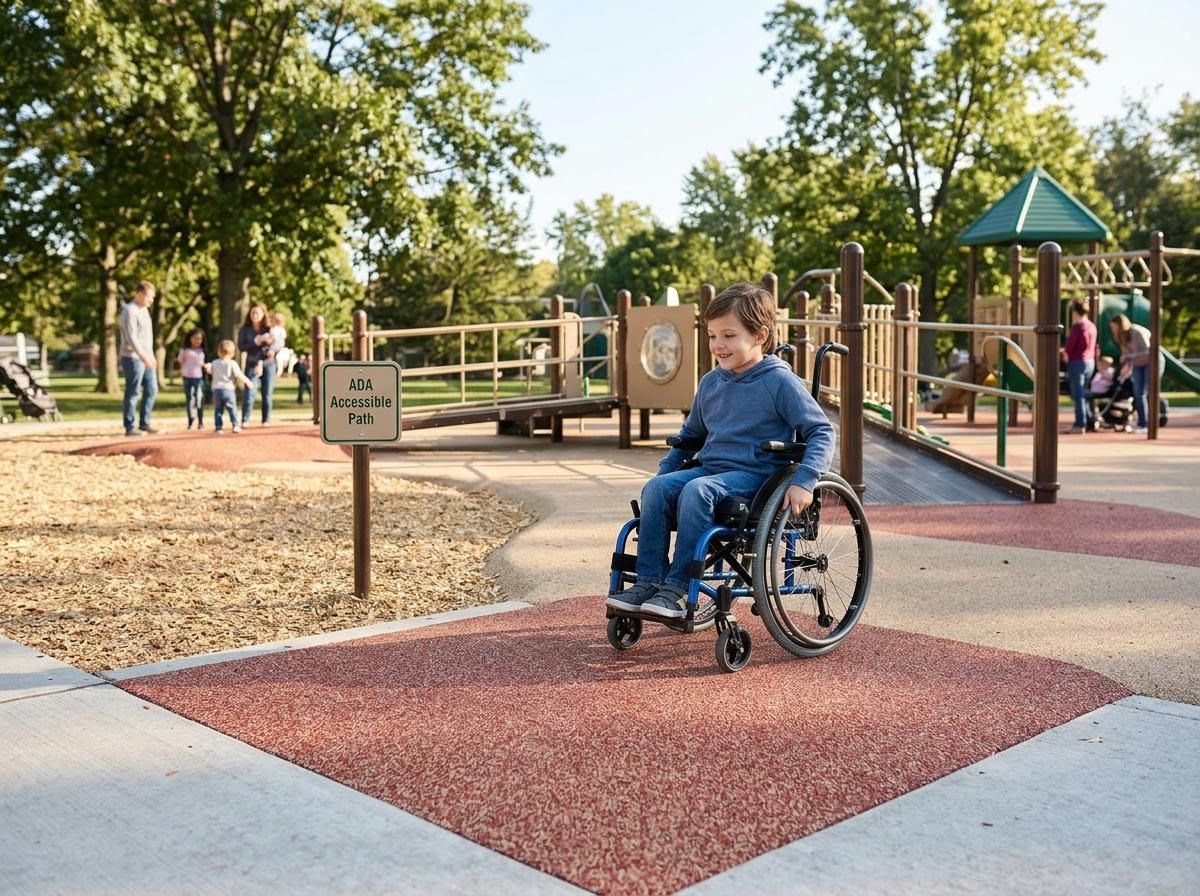
Understanding ADA Compliance for Playground Surfacing
ADA compliance for playground surfacing primarily focuses on creating a firm, stable, and slip-resistant surface that allows individuals using wheelchairs, crutches, or other mobility devices to move freely and independently throughout the play area. This means the surface must be accessible from the point of entry to all accessible play components. Key factors include minimizing changes in level, ensuring a consistent surface, and providing adequate impact attenuation to protect against falls. While fall protection is crucial, the focus for ADA is on the ease of travel and maneuverability across the surface.
Poured-in-Place (PIP) Rubber: A Seamless Solution
Poured-in-Place (PIP) rubber surfacing is often lauded for its inherent accessibility advantages. This material creates a continuous, seamless surface that is exceptionally smooth and stable. Its uniform nature eliminates gaps, loose particles, or uneven spots, making it ideal for wheelchair users and those with mobility challenges to navigate effortlessly. The consistent firmness of PIP rubber ensures reliable traction and predictable movement, reducing the effort required to traverse the playground. While the initial investment for PIP rubber can be higher, its long-term durability and low maintenance requirements for maintaining ADA compliance make it an attractive option for many projects seeking maximum accessibility.

Engineered Wood Fiber (EWF): Natural and Compliant
Engineered Wood Fiber (EWF) is another popular surfacing choice that, when properly installed and maintained, can meet ADA requirements. Unlike typical landscaping mulch, EWF is specifically designed for playgrounds, featuring a fibrous composition that interlocks to form a stable surface. For EWF to be ADA compliant, it must be installed at the correct depth and compacted properly to create a firm and stable base. Regular maintenance, such as raking to redistribute the material and topping off to maintain the required depth, is crucial to prevent displacement and maintain its accessible qualities over time. This ongoing attention ensures that EWF remains a firm and compliant surface for all users.
Choosing the Right Surface for Your Accessible Playground
Deciding between PIP rubber and EWF for ADA compliance involves considering various factors, including budget, aesthetic preferences, and maintenance capacity. PIP rubber generally offers superior ease of access due to its consistent, smooth finish and requires less day-to-day maintenance to remain ADA compliant. EWF provides a natural look and can be a more budget-friendly option, but it demands more frequent upkeep, such as regular raking and replenishment, to ensure it retains its firmness and depth for accessibility. Both solutions, when installed and maintained correctly, provide safe and accessible play environments, but their suitability will depend on the specific needs and resources of your project.
Ultimately, both Poured-in-Place (PIP) rubber and Engineered Wood Fiber (EWF) can create ADA-compliant playground surfaces, each with its unique considerations for installation, maintenance, and long-term accessibility. Making the best choice for your community requires a thorough understanding of these factors and how they align with your project goals and operational capacity. To ensure your playground truly embraces inclusivity and meets all accessibility standards, we invite you to explore the extensive resources available on playground surfacing options and compliance requirements.