
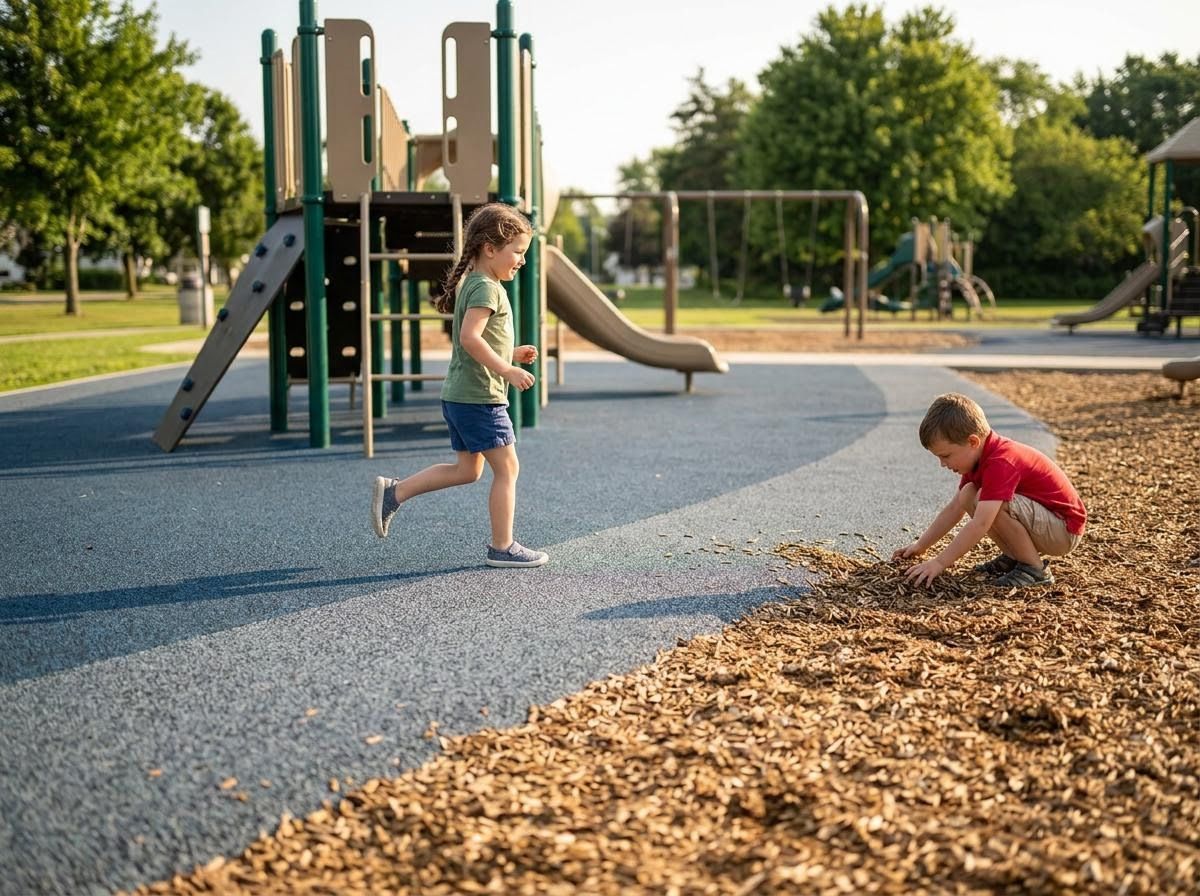
Ensuring children can play safely is paramount, and the surface beneath their feet plays a critical role in preventing injuries from falls. When planning a new playground or upgrading an existing one, choosing the right surfacing material is a decision that directly impacts safety and peace of mind. At Pacific Playground, we understand these considerations deeply, which is why we’re exploring two of the most popular options: Poured-in-Place (PIP) rubber and Engineered Wood Fiber (EWF), to help you determine which offers superior fall protection for your play space.
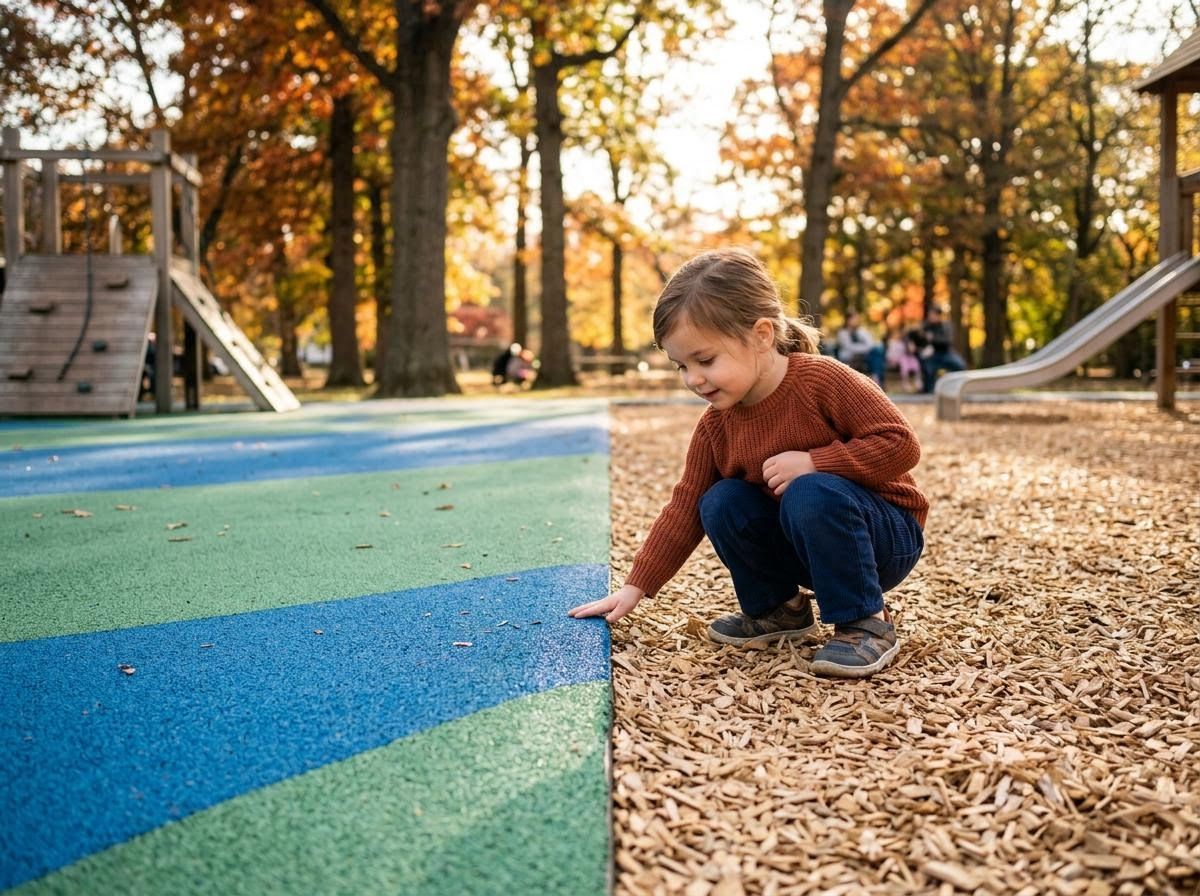
Understanding Fall Protection Standards
Before diving into specific materials, it's essential to grasp what "fall protection" truly entails for playgrounds. The efficacy of any surfacing material is measured by its ability to absorb impact and reduce the severity of injuries from falls. This is primarily determined by its Critical Fall Height (CFH) rating, established through rigorous testing that adheres to ASTM International standards. These standards specify how high a child can safely fall onto a particular surface without sustaining a life-threatening head injury. Crucially, achieving and maintaining the rated CFH depends not only on the material itself but also on proper installation and consistent maintenance.
Poured-in-Place Rubber: The Consistent Cushion
Poured-in-Place (PIP) rubber surfacing offers a seamless, unitary safety surface created by mixing rubber granules with a binding agent on-site and troweling it into place. This method allows for incredible design flexibility and custom color patterns. From a fall protection standpoint, PIP rubber is highly valued for its consistent shock absorption across the entire play area. It provides a uniform cushioning layer that is less prone to displacement or variation in depth, meaning its critical fall height rating is reliably maintained over a long period with minimal daily intervention. This consistency, coupled with its excellent critical fall height ratings for various thicknesses, makes it a top choice for preventing injuries from falls, especially from taller play structures. Its smooth, level surface also makes it an accessible option, complying with ADA standards.
Engineered Wood Fiber: The Natural & Maintainable Option
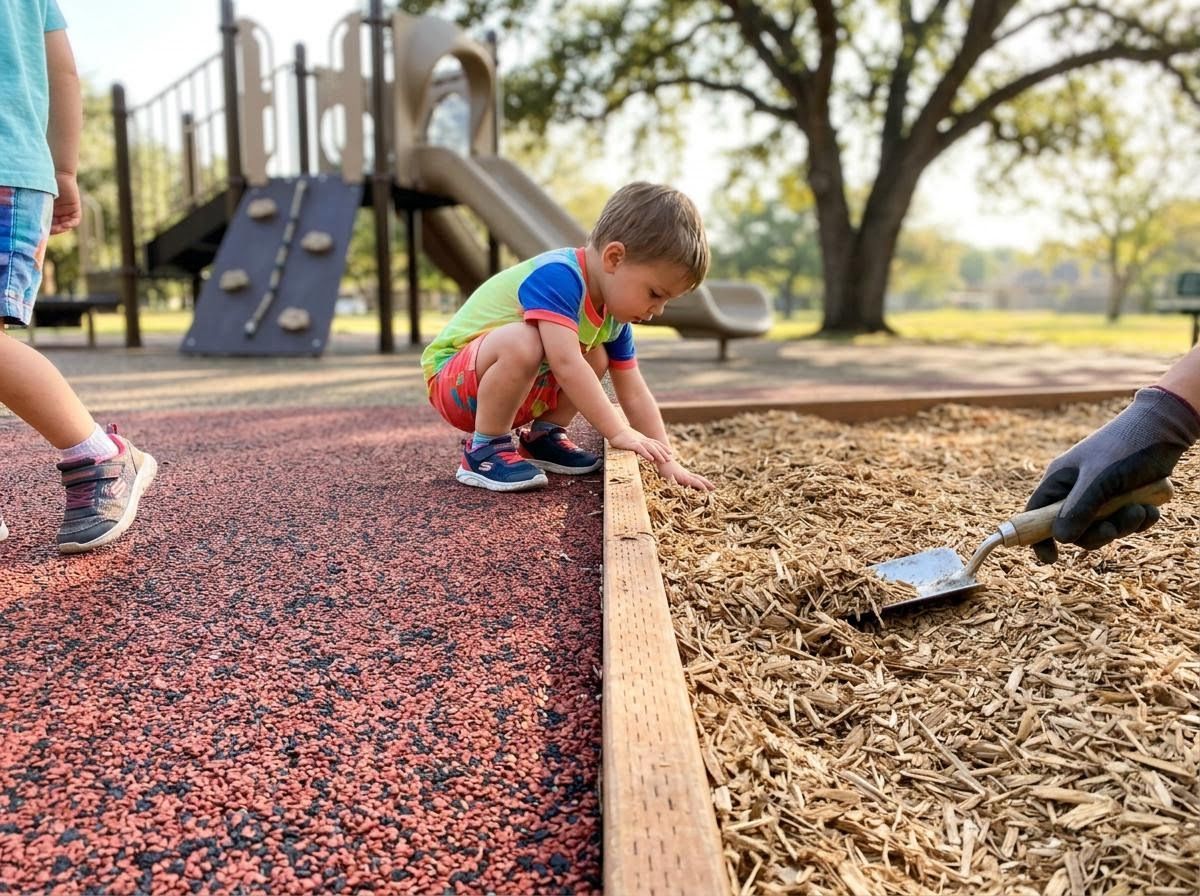
Engineered Wood Fiber (EWF) is another widely used playground surfacing material, known for its natural aesthetic and cost-effectiveness. Unlike standard landscaping mulch, EWF consists of specially processed wood fibers designed to knit together and provide cushioning. When installed and maintained at the correct depth, EWF can provide excellent fall protection, meeting ASTM standards for critical fall height. However, its effectiveness as a fall attenuating surface is heavily reliant on vigilant maintenance. EWF can compact over time and displace from high-traffic areas or under swings and slides. To ensure it consistently provides the intended level of fall protection, EWF requires regular raking to redistribute the material and maintain adequate depth, along with periodic replenishment to account for natural decomposition and displacement.
Key Considerations for Optimal Safety
When comparing Poured-in-Place Rubber and Engineered Wood Fiber for fall protection, the choice often comes down to balancing initial investment with long-term maintenance commitment. PIP rubber offers unparalleled consistency and requires less ongoing adjustment to maintain its fall protection capabilities, but typically has a higher upfront cost. EWF is generally more budget-friendly initially, but demands a more rigorous and continuous maintenance schedule to ensure it always meets its critical fall height requirements. Both materials, when properly installed and meticulously maintained according to manufacturer guidelines and safety standards, can provide excellent fall protection. The ultimate decision should consider your specific playground design, budget, desired aesthetics, and your capacity for ongoing maintenance to guarantee a safe play environment.
Choosing the ideal playground surfacing requires a thoughtful approach that prioritizes children's safety and considers the unique aspects of your play space. Both Poured-in-Place rubber and Engineered Wood Fiber offer effective fall protection when correctly implemented and maintained, highlighting that quality installation and diligent care are just as crucial as the material itself. To explore which surfacing solution best fits your project's needs and to learn more about creating a safe, engaging, and compliant playground, we invite you to connect with our experienced team at Pacific Playground for expert guidance.